

 SPITTING CARB - 914-6 all stock, SEEMS LIKE I HAVE THIS FIGURED OUT! SPITTING CARB - 914-6 all stock, SEEMS LIKE I HAVE THIS FIGURED OUT! |
|
|

|
Porsche, and the Porsche crest are registered trademarks of Dr. Ing. h.c. F. Porsche AG.
This site is not affiliated with Porsche in any way. Its only purpose is to provide an online forum for car enthusiasts. All other trademarks are property of their respective owners. |
|
|
  |
| ctc911ctc |
 Oct 9 2025, 07:43 AM Oct 9 2025, 07:43 AM
Post
#1
|
|
Senior Member  Group: Members Posts: 1,365 Joined: 9-June 18 From: boston Member No.: 22,206 Region Association: North East States 
 |
1970 - 914-6 All stock
Got the car off the rack after a 1 year clean up documented here: http://www.914world.com/bbs2/index.php?sho...3371&st=100 - tightened the lugs, check one more time for leaks....... Car started first try, backed out of the driveway and went around the block Drive strong.....very strong...... #2 cyl-carb is still 'spitting' definitely not backfiring. Chasing this through my trusty guide: https://www.performanceoriented.com/special-procedures-1 See "notes" section Seems that when I performed the Lean Best Idle procedure #2 failed during the procedure......the diagnosis within the document states that either the path in that carb #2 is blocked or the jet is the wrong size - my bet is a clog......though the carbs were very clean when I got the car. There is a little noise from the right side, that in a 914-2L 4Cyl would be considered quiet, my hope is that it is not valve noise and may be exhaust leaking......did I tighten the heater manifold small nuts????? dry.gif Carb advice sought from those that have chased a SPITTING Carb |
   |

 
|
| Superhawk996 |
Oct 9 2025, 08:41 AM
Post
#2
|
|
914 Guru Group: Members Posts: 8,016 Joined: 25-August 18 From: Woods of N. Idaho Member No.: 22,428 Region Association: Galt's Gulch
|
Unclear on the question here?
You need to resolve the issue on cyl 2 with inability to get mixture set properly. Appearance of carbs is almost meaningless. Need to ensure all passages are clean and clear and that idle jets are the same on on all cylinders as a start. Ensure all gaskets are OK, no missing o-rings, no excess air leakage at throttle shafts. Etc. |
|
|
|
| ctc911ctc |
Oct 9 2025, 09:34 AM
Post
#3
|
|
Senior Member Group: Members Posts: 1,365 Joined: 9-June 18 From: boston Member No.: 22,206 Region Association: North East States
|
Thank you for the reply SH,
I was more or less looking for 'other paths' such as make certain that the bypass screw is set to.............." or other items that come from experience. I had the carbs off, apart and calibrated floats, squirts, etc. the Inside of the carbs were remarkably clean. I am thinking of taking the carb off and 1. looking for material inconsistencies - missing washers, etc. 2. Measuring the jets for #2 and comparing against #1 and #3 3. Clogged path - not sure what to do here, how to test, what to use. Will follow your guidance, (IMG:style_emoticons/default/smile.gif) Thank you, QUOTE(Superhawk996 @ Oct 9 2025, 08:41 AM)  Unclear on the question here? You need to resolve the issue on cyl 2 with inability to get mixture set properly. Appearance of carbs is almost meaningless. Need to ensure all passages are clean and clear and that idle jets are the same on on all cylinders as a start. Ensure all gaskets are OK, no missing o-rings, no excess air leakage at throttle shafts. Etc. |
|
|
|
| Superhawk996 |
Oct 9 2025, 09:57 AM
Post
#4
|
|
914 Guru Group: Members Posts: 8,016 Joined: 25-August 18 From: Woods of N. Idaho Member No.: 22,428 Region Association: Galt's Gulch
|
Anytime carbs are apart it’s good standard practice to verify all passages are clean and clear. Blow air through and/or use carb cleaner with little red straw to blow through passages.
At a minimum verify jet size by numbers stamped on them. Even better to use jet drill gauges to see they are same size as stamped. Unusual to find them drilled by someone previous . . . But I’ve seen it in carbs I’ve worked on. Use real ether starting fluid and spritz it around throttle shafts - look for a significant idle increase that is different in #2 vs its adjacent barrels. Goes without saying - make sure valves are adjusted properly on #2. In my experience bad valve adjustment is more often the source of “spitting” than lean mixture problems. Since I have a leak down gauge; personally I’d leak down #2 just to listen for any valve leakage in addition to the verification of valve adjustment (ie can have properly adjusted but still have poor seal at the valve face). |
|
|
|
| slivel |
Oct 9 2025, 10:07 AM
Post
#5
|
|
Old car....... older driver Group: Members Posts: 553 Joined: 10-July 04 From: San Diego Member No.: 2,332 Region Association: Southern California |
[quote name='ctc911ctc' date='Oct 9 2025, 08:34 AM' post='3227426']
Thank you for the reply SH, I was more or less looking for 'other paths' such as make certain that the bypass screw is set to.............." or other items that come from experience. I had the carbs off, apart and calibrated floats, squirts, etc. the Inside of the carbs were remarkably clean. I am thinking of taking the carb off and 1. looking for material inconsistencies - missing washers, etc. 2. Measuring the jets for #2 and comparing against #1 and #3 3. Clogged path - not sure what to do here, how to test, what to use. Will follow your guidance, (IMG:style_emoticons/default/smile.gif) Thank you, Do the easy things first:
|
|
|
|
| ctc911ctc |
Oct 9 2025, 10:42 AM
Post
#6
|
|
Senior Member Group: Members Posts: 1,365 Joined: 9-June 18 From: boston Member No.: 22,206 Region Association: North East States
|
This is the exact guidance I was looking for, thank you SH and SL
|
|
|
|
| infraredcalvin |
Oct 9 2025, 11:15 AM
Post
#7
|
|
Distracted Member Group: Members Posts: 1,764 Joined: 25-August 08 From: Ladera Ranch, CA Member No.: 9,463 Region Association: Southern California
|
QUOTE(Superhawk996 @ Oct 9 2025, 08:57 AM) Goes without saying - make sure valves are adjusted properly on #2. In my experience bad valve adjustment is more often the source of “spitting” than lean mixture problems. Since I have a leak down gauge; personally I’d leak down #2 just to listen for any valve leakage in addition to the verification of valve adjustment (ie can have properly adjusted but still have poor seal at the valve face). (IMG:style_emoticons/default/agree.gif) |
|
|
|
| ctc911ctc |
Oct 9 2025, 11:19 AM
Post
#8
|
|
Senior Member Group: Members Posts: 1,365 Joined: 9-June 18 From: boston Member No.: 22,206 Region Association: North East States
|
Less than 1 hour of run time between now and this measurement earlier in the year.
1 - 162 2 - 167 3 - 166 4 - 165 5 - 166 6 - 161 I have the leak down numbers somewhere - but I recall them to be consistent as well, The valves were all set when the engine was out and on the stand - there is a mention of this within the rebuild thread Thank you! ON to the carbs! |
|
|
|
| Superhawk996 |
Oct 9 2025, 11:46 AM
Post
#9
|
|
914 Guru Group: Members Posts: 8,016 Joined: 25-August 18 From: Woods of N. Idaho Member No.: 22,428 Region Association: Galt's Gulch
|
QUOTE(ctc911ctc @ Oct 9 2025, 01:19 PM) Less than 1 hour of run time between now and this measurement earlier in the year. 1 - 162 2 - 167 3 - 166 4 - 165 5 - 166 6 - 161 I have the leak down numbers somewhere - but I recall them to be consistent as well, The valves were all set when the engine was out and on the stand - there is a mention of this within the rebuild thread Thank you! ON to the carbs! Just to clarify- with respect to spitting the location of leakage matters not the absolute numbers Example: let’s say all cylinders are excellent with say 5% leak down. But let’s say cylinders 1, 3-6 are primarily leaking 5% past the rings - great all is good and pretty normal due to ring gapping, cylinder sealing, etc. But let’s say cylinder #2 is leaking 5% all past the intake valve seems great but not really - you will have spitting on #2 and more trouble tuning that cylinder. Clearly I’m making up a pretty extreme example here to make a point. Not trying to imply this is what is going on in your case. The point being - where the leakage is at matters in conjunction with the absolute leakage percentage. You’ve got to understand what is being measured, know where the leakage is at; that is the power of a leak down test Vs. compression test. There is more to it than looking at absolute numbers or leak down percentages. Focus on the carbs but if you can’t get there - recheck assumptions. |
|
|
|
| ctc911ctc |
Oct 9 2025, 12:49 PM
Post
#10
|
|
Senior Member Group: Members Posts: 1,365 Joined: 9-June 18 From: boston Member No.: 22,206 Region Association: North East States
|
Understood - good solid engineering exercise......will do
QUOTE(Superhawk996 @ Oct 9 2025, 11:46 AM) QUOTE(ctc911ctc @ Oct 9 2025, 01:19 PM) Less than 1 hour of run time between now and this measurement earlier in the year. 1 - 162 2 - 167 3 - 166 4 - 165 5 - 166 6 - 161 I have the leak down numbers somewhere - but I recall them to be consistent as well, The valves were all set when the engine was out and on the stand - there is a mention of this within the rebuild thread Thank you! ON to the carbs! Just to clarify- with respect to spitting the location of leakage matters not the absolute numbers Example: let’s say all cylinders are excellent with say 5% leak down. But let’s say cylinders 1, 3-6 are primarily leaking 5% past the rings - great all is good and pretty normal due to ring gapping, cylinder sealing, etc. But let’s say cylinder #2 is leaking 5% all past the intake valve seems great but not really - you will have spitting on #2 and more trouble tuning that cylinder. Clearly I’m making up a pretty extreme example here to make a point. Not trying to imply this is what is going on in your case. The point being - where the leakage is at matters in conjunction with the absolute leakage percentage. You’ve got to understand what is being measured, know where the leakage is at; that is the power of a leak down test Vs. compression test. There is more to it than looking at absolute numbers or leak down percentages. Focus on the carbs but if you can’t get there - recheck assumptions. |
|
|
|
| 930cabman |
Oct 9 2025, 12:49 PM
Post
#11
|
|
Advanced Member Group: Members Posts: 4,804 Joined: 12-November 20 From: Buffalo Member No.: 24,877 Region Association: North East States
|
weak/broken valve spring?
or some other issue with #2 |
|
|
|
| ctc911ctc |
Dec 13 2025, 02:28 PM
Post
#12
|
|
Senior Member Group: Members Posts: 1,365 Joined: 9-June 18 From: boston Member No.: 22,206 Region Association: North East States
|
UPDATE!!!!!!!
Teeners! Your assistance in the past was very helpful, I am looking for a bit more guidance. I have the car back together, it runs, shifts well and is a delight to drive – however it is very hard to start. I have good compression in all cylinders with new wires, plugs, rebuilt distributor. See note below for details. I am centering on looking at the carbs – I had them off, they were very new looking and clean. I calibrated as per the Weber specs (checking the jets, pathways, leveling of the floats, etc). The accel pumps at each barrel are operational, STARTING CHALLENGES When I start the car, I pump the accelerator twice, pull the cold start accelerator handle and turn the key. The car immediately fires and then dies. I have to do this 5-10 times. The car then begins to improve and I am able to, by pumping the gas, get the engine running. When it is first running it “spits” but there are no backfires. After a couple of minutes it is as if a switch is thrown and the engine start running well. The RPMs goes from 1K to 3K. I push the starting accelerator handle back down and then the engine runs pretty good. There is a suspicion that it is running very lean when cold (air leaks) and that when warm the leaks are minimized due to heat and the steel expanding. I have triple checked all bolts and gaskets. I leveled the headers and put a straight edge against the cam box which bolts to the headers, etc. Today I smoke tested and there seem to be no leaks below the carbs or on the carb shafts. Today I also removed all of the jets and triple checked for debris....very clean..... My sense of this is that the idle circuit is perhaps clogged or some other carb anomolie is treating me poorly. Any guidance or direction would be terrific. I believe the next step for me is to send them to Carl at Klassikats: https://www.youtube.com/@klassikats Oh, here is a the numbers from earlier this summer: 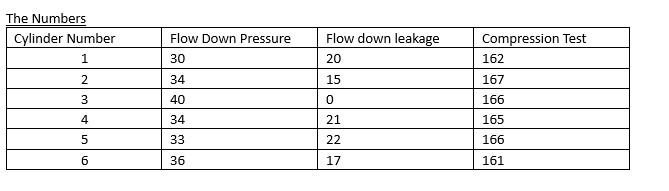 |
|
|
|
| Cairo94507 |
Dec 13 2025, 03:41 PM
Post
#13
|
|
Michael Group: Members Posts: 10,750 Joined: 1-November 08 From: Auburn, CA Member No.: 9,712 Region Association: Northern California
|
I remember the 6's I've had that still has Webers. When starting them, cold, I would pump the gas pedal multiple times while cranking and it would fire. Typically took maybe 10 seconds. Once it fired, I would use the hand throttle to set the idle at about 1,500 RPM to let it warm up. (IMG:style_emoticons/default/beerchug.gif)
|
|
|
|
| rgalla9146 |
Dec 13 2025, 06:47 PM
Post
#14
|
|
Advanced Member Group: Members Posts: 4,994 Joined: 23-November 05 From: Paramus NJ Member No.: 5,176 Region Association: None
|
I just started (6pm) my dead stock 6 after it sat outside since 11 am in 35 degree temp. Ignition on, fuel pump running, pump gas four times, hand throttle full up. Started quickly and raced to high RPM, I immediately moved the throttle gradually down, engine speed reduced and continued to run smoothly. After less than a minute I was able to push the throttle fully off allowing the car to idle as normal. The hand throttle is the choke with these carbs. There is no other cold start mechanism, except for your right foot. With sufficient gas and coordinated hand throttle, good results should happen. With time you will become better at judging how to respond to outside temp and hot or cold engine. Cary have you determined what venturies, mains, idles, air corrections and emulsions are in the carbs ? |
|
|
|
| fixer34 |
Dec 14 2025, 07:58 AM
Post
#15
|
|
Senior Member Group: Members Posts: 1,466 Joined: 16-September 14 From: Chicago area Member No.: 17,908 Region Association: Upper MidWest
|
QUOTE(rgalla9146 @ Dec 13 2025, 06:47 PM) I just started (6pm) my dead stock 6 after it sat outside since 11 am in 35 degree temp. Ignition on, fuel pump running, pump gas four times, hand throttle full up. Started quickly and raced to high RPM, I immediately moved the throttle gradually down, engine speed reduced and continued to run smoothly. After less than a minute I was able to push the throttle fully off allowing the car to idle as normal. The hand throttle is the choke with these carbs. There is no other cold start mechanism, except for your right foot. With sufficient gas and coordinated hand throttle, good results should happen. With time you will become better at judging how to respond to outside temp and hot or cold engine. Cary have you determined what venturies, mains, idles, air corrections and emulsions are in the carbs ? Yep, this is pretty much how I've started mine (cold) in like, forever... Only I don't use the hand throttle. I usually get 3-4 cylinders fire right away, butterfly the throttle a little, the rest kick in. Try to keep RPMs in the 1500-2000 range for a couple minutes until it runs smoothly then it will idle. Once it has been run/up to temperature, I can reach in the window and turn the key, it starts and idles with no other intervention. I don't think the idle jets would be the issue on cold start, you are pretty much running on the raw gas from the accelerator pumps and main jets. |
|
|
|
| mate914 |
Dec 14 2025, 08:05 AM
Post
#16
|
|
Matt Group: Members Posts: 951 Joined: 27-February 09 From: Eagles mere, PA Member No.: 10,102 Region Association: North East States
|
QUOTE(fixer34 @ Dec 14 2025, 08:58 AM) QUOTE(rgalla9146 @ Dec 13 2025, 06:47 PM) I just started (6pm) my dead stock 6 after it sat outside since 11 am in 35 degree temp. Ignition on, fuel pump running, pump gas four times, hand throttle full up. Started quickly and raced to high RPM, I immediately moved the throttle gradually down, engine speed reduced and continued to run smoothly. After less than a minute I was able to push the throttle fully off allowing the car to idle as normal. The hand throttle is the choke with these carbs. There is no other cold start mechanism, except for your right foot. With sufficient gas and coordinated hand throttle, good results should happen. With time you will become better at judging how to respond to outside temp and hot or cold engine. Cary have you determined what venturies, mains, idles, air corrections and emulsions are in the carbs ? Yep, this is pretty much how I've started mine (cold) in like, forever... Only I don't use the hand throttle. I usually get 3-4 cylinders fire right away, butterfly the throttle a little, the rest kick in. Try to keep RPMs in the 1500-2000 range for a couple minutes until it runs smoothly then it will idle. Once it has been run/up to temperature, I can reach in the window and turn the key, it starts and idles with no other intervention. I don't think the idle jets would be the issue on cold start, you are pretty much running on the raw gas from the accelerator pumps and main jets. This is how I start both the six cars. A 2.7 40 Weber and a 3.2 46 PMO. Engine timing ok? Matt |
|
|
|
| 930cabman |
Dec 14 2025, 10:16 AM
Post
#17
|
|
Advanced Member Group: Members Posts: 4,804 Joined: 12-November 20 From: Buffalo Member No.: 24,877 Region Association: North East States
|
Guess I'm lucky to have a 914/6 conversion and a 1975 911S converted to Webers. The 911S starts great, the 914/6 just as you describe. She's in the paint shop now, but will be rolling my sleeves up soon to get after the "hard start"
|
|
|
|
| brant |
Dec 14 2025, 10:36 AM
Post
#18
|
|
914 Wizard Group: Members Posts: 12,259 Joined: 30-December 02 From: Colorado Member No.: 47 Region Association: Rocky Mountains 
|
Measure the volume from the accelerator pump diagrams.
Then replace them most likely They harden after a few years and reduce volume This is a part of the carb setup that it sounds like you may have skipped Then reset your timing. I agree with the above about the timing being off possibly |
|
|
|
| gereed75 |
Dec 14 2025, 11:18 AM
Post
#19
|
|
Senior Member Group: Members Posts: 1,446 Joined: 19-March 13 From: Pittsburgh PA Member No.: 15,674 Region Association: North East States
|
Agree with everything here except one thing- the hand throttle simply holds the throttle open, it does not act like a choke. There is no choke provision on these carbs
Starting cold requires a rich mixture. You get that by pumping the throttle before starting This activates the acceleration pump diaphragms to squirt fuel into the intakes and producing a rich mixture. Keeping the throttles closed at that point ensures the mixture stays rich ( which is what the traditional choke does in a choke equipped carb) Once started, the hand throttle can be used to crack the throttles and increase idle speed to accelerate warm up. Not saying using the hand throttle doesn’t work for those that use it. It is particularly good for clearing a flooded (overly rich condition) in the combustion chamber by letting in more air while cranking the engine. |
|
|
|
| 930cabman |
Dec 14 2025, 04:35 PM
Post
#20
|
|
Advanced Member Group: Members Posts: 4,804 Joined: 12-November 20 From: Buffalo Member No.: 24,877 Region Association: North East States
|
QUOTE(gereed75 @ Dec 14 2025, 12:18 PM) Agree with everything here except one thing- the hand throttle simply holds the throttle open, it does not act like a choke. There is no choke provision on these carbs Starting cold requires a rich mixture. You get that by pumping the throttle before starting This activates the acceleration pump diaphragms to squirt fuel into the intakes and producing a rich mixture. Keeping the throttles closed at that point ensures the mixture stays rich ( which is what the traditional choke does in a choke equipped carb) Once started, the hand throttle can be used to crack the throttles and increase idle speed to accelerate warm up. Not saying using the hand throttle doesn’t work for those that use it. It is particularly good for clearing a flooded (overly rich condition) in the combustion chamber by letting in more air while cranking the engine. (IMG:style_emoticons/default/agree.gif) Hand throttle is not an enriching device, it merely opens the throttle plates to raise the idle speed. Once the engine has some level of heat, she should run smoothly at 900 - 1000 rpms |
|
|
|
|
3 User(s) are reading this topic (3 Guests and 0 Anonymous Users)
0 Members:

|
Lo-Fi Version | Time is now: 29th August 2026 - 12:04 AM |
Invision Power Board
v9.1.4 © 2026 IPS, Inc.